A horse with back tension rarely announces it in one clear gesture. More often, the first signs are small: the skin trembles beneath your hand, the horse steps away when you approach the saddle area…
A horse with back tension rarely announces it in one clear gesture. More often, the first signs are small: the skin trembles beneath your hand, the horse steps away when you approach the saddle area, the topline feels guarded, or the animal lowers its head only after several minutes of quiet palpation.
These patterns can make equine back tension difficult to read. The Bladder Meridian offers one useful map for slow, observant bodywork. It travels on both sides of the horse’s back, approximately 2 to 3 inches below and parallel to the topline, connecting the upper neck, thoracic region, lumbar area, pelvis, and hind limb. In equine shiatsu, working along this pathway may help soften muscular holding, invite a parasympathetic state, and reveal where the body is protecting itself.
The word release matters here. It does not mean forcing a joint, chasing a reaction, or pressing until the horse gives up. It means noticing a subtle shift: a longer exhale, a blink, a swallow, a ripple through the tissue, or the quiet yielding of the back beneath your fingers.
Mapping the Bladder Meridian along the horse’s back
In Traditional Chinese Medicine, the Bladder Meridian belongs to the Water element. In practical equine bodywork, you can think of it as a long, responsive line running on each side of the spine rather than directly over the spinal processes.
Place your hand beside the topline, not on the bony midline. The tissue here may feel broad and springy in one region, rope-like in another, and almost absent beneath the hand where the horse has been bracing for a long time. Those differences do not automatically identify a lesion. They are changes in tone, temperature, texture, and response that help you understand the horse’s current tension pattern.
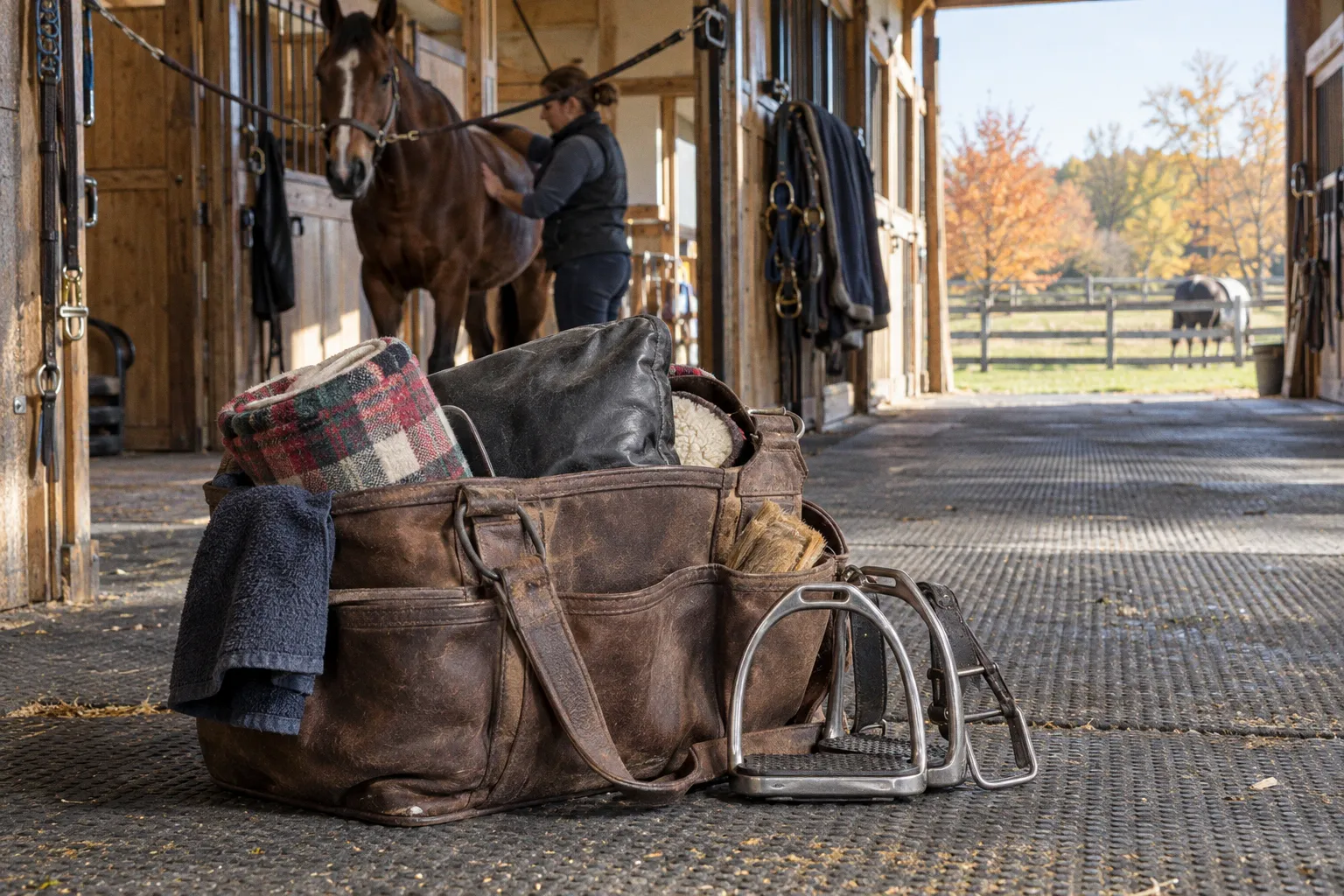
Before touching, allow the horse to stand without being restrained into a fixed posture. A horse that cannot move its feet, lower its head, or turn away cannot give you a clean response. I prefer a quiet stable aisle, a familiar grooming area, or a safe paddock corner where the horse can remain interested in the surroundings without feeling trapped.
Begin with broad contact:
1. Rest your palm beside the topline and wait for the tissue to accept your weight.
2. Glide slowly along the meridian, following the horse’s breathing rather than setting a rigid rhythm.
3. Notice changes in warmth, muscle density, skin twitching, and the horse’s facial expression.
4. Return to areas that feel different, but do not immediately increase pressure.
5. Let the response guide you: a softening is useful information, while a sharp flinch asks for space and reassessment.
When you palpate, keep your fingers listening. The hand should not behave like a tool searching for a button. It should feel whether the tissue is yielding, guarding, or beginning to reorganize under gentle contact.
The most valuable response is often not a dramatic yawn, but the moment the horse stops holding its breath.
Seven Bladder Meridian points and working zones
The seven points below are traditionally associated with equine back, neck, bone, joint, and hind-limb patterns. They are not interchangeable, and they should not be treated as a sequence that every horse must tolerate from beginning to end.
The Bladder Meridian is paired bilaterally, so work on both sides when the horse is comfortable. However, do not assume that the two sides should feel identical. A difference between left and right may reflect posture, training, saddle influence, a limb-loading pattern, or pain that needs veterinary investigation.
1. BL-10: settling the upper neck and poll region
Bladder 10 is located a hand’s width behind the ears at the upper neck. This area can become guarded in horses that carry tension through the poll, atlas, and upper cervical region. It may also feel reactive after prolonged collection, restrictive equipment, dental discomfort, or a habit of holding the head and neck rigidly.
Stand beside the horse’s shoulder rather than directly in front of the face. Place your fingertips gently into the soft tissue behind the ear and allow the pressure to remain light. A horse may lower the head, blink, lick, chew, or turn the nose slightly away as the neck begins to soften.
Do not dig toward the cervical joints. The purpose is not to force the head downward or to create a large range of motion. I am looking for a small release under the fingertips, perhaps a warmer patch of tissue or a change from firm resistance to a more elastic feel.
If the horse lifts the head sharply, pins the ears, threatens, or repeatedly moves away, stop and consider why the area is sensitive. Upper-neck reactions can have many causes, and an acupressure point cannot explain all of them.
2. BL-11: the bone-associated point at the upper thoracic region
Bladder 11 lies approximately 1.5 cun lateral to the dorsal midline at the level of the second thoracic vertebra. In traditional practice, it is known as an influential meeting point for the bones and is associated with cervical stiffness, bone health, and joint patterns.
Because this is close to the withers and the beginning of the thoracic spine, it is an area where saddle fit, posture, muscle development, and protective bracing may overlap. The safest approach is broad and patient. Use the pads of your fingers or a relaxed thumb, and work beside the midline rather than pressing onto the spinous processes.
Notice whether the tissue feels dense and immovable, or whether it changes as the horse breathes. Some horses will lengthen the neck after a few quiet contacts. Others will show a small blink or a softening around the mouth before the back itself changes.
BL-11 is not a substitute for investigating persistent wither pain, swelling, heat, or a saddle that repeatedly causes resistance. It can be part of a gentle bodywork session, but it should never be used to press through a horse’s warning.
3. BL-18: the mid-back transition
BL-18 is traditionally located on the Bladder Meridian in the mid-thoracic region, around the level associated with the liver area. For equine shiatsu, this is best understood as a working zone along the thoracic back rather than a tiny target that must be found with absolute precision.
The mid-back often reveals how the horse organizes movement. A dressage horse may brace here when asked to lift the forehand. A jumping horse may carry tension after repeated landing work. A horse with an uncomfortable saddle may develop a guarded, uneven response along one side.
Use a slow palm contact first. Then, if the horse remains relaxed, follow the meridian with a thumb-width pressure that never becomes poking. Move in short sections and pause after each one. A release might appear as a longer exhale, a ripple across the skin, a lowering of the rib cage, or a gradual widening of the back.
If the horse steps away every time your hand reaches this region, do not interpret that as a need for stronger pressure. Repeated avoidance is information. Examine the saddle, training load, hoof balance, limb comfort, and veterinary possibilities before returning to bodywork.
4. BL-20: the thoracolumbar softening point
BL-20 is another traditionally used point along the thoracic portion of the Bladder Meridian, commonly associated with the spleen area in Chinese medicine. In hands-on horse work, it sits within the region where the back begins to transition toward the lumbar area and where many horses carry postural effort.
This is a place to slow down. The thoracolumbar junction can feel very different from the upper back: less broad, more reactive, and more influenced by whether the horse is standing square or resting one hind limb.
Place one hand lightly on the horse’s barrel to sense the breath while the other hand contacts the meridian beside the spine. The paired contact can help you notice whether the tissue moves with the ribs or remains held. When the horse yields, you may feel the layer beneath your hand become less shallow and more fluid.
Avoid twisting the horse’s back or asking for a stretch during the release. A passive, supported posture is enough. The goal is not to produce a dramatic bend; it is to allow the horse’s own nervous system to stop guarding for a moment.
5. BL-23: the lumbar and kidney-associated region
BL-23 lies on the lumbar section of the Bladder Meridian and is traditionally associated with the kidney area. It is frequently discussed in relation to lower-back weakness, fatigue, and tension, but these associations should not be confused with a diagnosis of kidney disease or a structural lumbar problem.
The lumbar region requires especially respectful touch. Begin with the whole hand, following the line beside the spine rather than searching immediately for a single point. If the horse accepts that contact, allow the thumb to rest into the muscular channel without pushing deeply.
A horse may respond by widening the hind stance, lowering the head, sighing, or gently shifting weight. It may also tighten the abdomen or clamp the tail. These are not failures. They tell you that the current pressure, location, or duration is too much.
When a horse has persistent lumbar soreness, difficulty engaging the hindquarters, repeated bucking under saddle, or a sudden change in performance, bodywork should follow a veterinary assessment rather than replace it. Shiatsu can support comfort and relaxation, but it cannot rule out sacroiliac pain, spinal pathology, hind-limb lameness, or an ill-fitting saddle.
6. BL-25: the lower lumbar support zone
BL-25 is traditionally located in the lower lumbar region and is often included in bodywork approaches addressing lumbar and pelvic tension. The exact point can be difficult to identify on a moving, muscular horse, so I encourage students to think in terms of a responsive zone rather than a pinprick location.
Stand beside the hindquarters with your body angled away from the kick zone. Keep your contact broad and predictable. If the horse turns its head to watch you, let it. If the tail swishes once, continue only if the rest of the body remains soft; if the tail clamps, the hindquarters tighten, or the horse threatens, step away.
Work with the exhale. As the ribs fall, allow the pressure to become slightly more present. As the horse inhales, soften your hand. This creates a rhythm that feels less like manipulation and more like an invitation.
The lower lumbar area is also where compensatory tension can accumulate when a horse is protecting a hind limb or avoiding abdominal engagement. If the response is consistently sharp on one side, treat that asymmetry as a reason for further assessment, not as proof that BL-25 is the source of the problem.
7. BL-60: the hock point with a back-release connection
Bladder 60 is located in the depression on the lateral aspect of the hock. It is commonly called Kunlun and is sometimes referred to in equine acupressure as the horse’s aspirin point. In traditional use, it is associated with back pain, tendon relaxation, and the relationship between the hind limb and the topline.
Because BL-60 is distant from the back, it can be a useful reminder that equine back tension is not always created in the back. A horse that protects the hock may recruit the lumbar muscles. A horse with a restricted hind-limb pattern may alter how it loads the pelvis and thoracolumbar region.
Locate the soft depression beside the hock rather than pressing directly into the joint. Use gentle, steady contact and observe the whole horse. Some horses lick or chew. Others shift the hind limb, lower the head, or release through the back several seconds after you have made contact.
Do not press BL-60 forcefully in a horse with acute hock swelling, heat, a fresh injury, severe lameness, or a recent procedure. A point associated with relaxation is not a treatment for an unstable joint or an undiagnosed injury.
How to read licking, chewing, yawning, and other release signs
During Bladder Meridian work, horses may blink, lick, chew, yawn, snort, shake the head, sigh, or stretch the neck. These responses often appear when the horse is shifting toward a more relaxed parasympathetic state, and they can accompany a change in muscular tone.
But no single sign proves that a particular point has corrected a particular problem.
A yawn may reflect relaxation, fatigue, social context, or simply a moment of transition. A head shake can indicate release, irritation, flies, tack discomfort, or pain. Licking and chewing may occur during processing, but they should be interpreted alongside posture, breathing, eye softness, weight distribution, and the horse’s willingness to remain connected.
I watch for a cluster of changes:
- The breath becomes slower and more complete.
- The lower lip softens rather than tightens.
- The neck lengthens without being pulled downward.
- The horse stands more evenly through all four limbs.
- The tissue becomes warmer, less dense, or more mobile beneath the hand.
- The horse returns to the contact after briefly moving away.
- The back begins to swing when the horse walks forward.
That final point matters. A horse can yawn through a session and still walk away stiff. The true question is not whether the horse produced a visible release sign, but whether its comfort and movement changed without coercion.
A release response is an invitation to observe more closely, not a certificate that the problem is solved.
Three pressure methods: balancing, Yin, and Yang
Traditional equine acupressure describes different intentions for pressure. The duration is a guide, not a rule, and every horse will respond at a different speed.
| Technique | Traditional intention | Approximate contact time | What I look for |
|---|---|---|---|
| Balancing | Harmonize and settle the point | About 1 minute | Steady breathing, softening, even contact |
| Yin | Encourage relaxation and release | About 2 minutes | Lowered head, yielding tissue, longer exhale |
| Yang | Stimulate or awaken the area | About 30 seconds | Increased alertness without tension or agitation |
For a horse with back stiffness, I generally begin with balancing contact. It gives the horse time to understand the touch and gives me time to read the tissue. If the response is calm, a longer Yin-style hold may support relaxation.
Yang-style stimulation requires more care. A horse that is already anxious, painful, or over-alert may not need more stimulation. The pressure should never become sharp, fast, or forceful simply because the horse has not responded immediately.
The numbers are useful as a framework, but they do not override the animal in front of you. If the horse releases after twenty seconds, you do not need to continue for two minutes. If the horse becomes guarded at forty seconds, the session has already told you enough.
Using acupoint sensitivity as a diagnostic clue
Research into equine diagnostic acupoints has found that sensitivity testing can identify the presence of lameness with accuracy reported up to 80 percent in clinical studies. This is valuable, but it is easy to misunderstand.
An acupoint that feels unusually sensitive may tell you that the horse’s nervous system is responding differently in that region. It does not tell you the precise cause of the lameness. It cannot replace gait observation, palpation by a veterinarian, flexion testing, imaging, or a full examination.
Think of sensitivity as a signpost rather than a destination.
If the horse reacts sharply to one side of the Bladder Meridian, compare the response with the opposite side, then observe the horse walking on a straight line and turning calmly. Record what you notice instead of repeating the pressure until the reaction changes. Repeatedly provoking a painful point can make the horse more guarded and can blur the original pattern.
A referral is appropriate when you notice:
- Sudden or worsening back pain.
- Heat, swelling, or marked sensitivity.
- Persistent lameness or an uneven gait.
- Bucking, rearing, or resistance that begins abruptly.
- Difficulty lying down, rising, backing, or turning.
- Neurological changes, weakness, or loss of coordination.
- Pain that remains unchanged after rest and gentle handling.
Equine shiatsu works best inside a wider care plan. Veterinary assessment, saddle evaluation, hoof care, appropriate conditioning, dental care, and recovery time all influence the horse’s ability to release tension.
A quiet seven-point session
You do not need to work all seven points in one treatment. In fact, shorter sessions are often clearer. A horse that is new to bodywork may become tired from processing unfamiliar sensations, and a horse with a complex tension pattern may offer better information when you work one region at a time.
A simple session might look like this:
1. Begin with observation. Watch the horse stand and walk before touching. Note head carriage, weight distribution, tail position, and ease of movement.
2. Make broad contact. Start beside the topline and follow the Bladder Meridian with a relaxed palm.
3. Choose one or two regions. For neck tension, begin around BL-10. For upper-back guarding, explore the BL-11 area. For hind-limb and topline connection, consider BL-60.
4. Use light, consistent pressure. Let the tissue respond before you decide whether to stay or move.
5. Pause after each release. Give the horse time to breathe, swallow, stretch, or reorganize its stance.
6. Recheck with movement. Walk the horse forward and observe whether the back feels more fluid, not merely more reactive.
7. Record the pattern. Note where the horse accepted contact, where it guarded, and how long the change lasted.
The most useful session may end with only one meaningful shift. Perhaps the horse lowers the neck when you approach the saddle. Perhaps the stride becomes less restricted after work around BL-60. Perhaps you discover that the right lumbar region is consistently sensitive and needs professional investigation.
That information is enough. Bodywork does not need to produce a spectacle to be worthwhile.
When bladder meridian work is not the first step
Gentle contact is not appropriate as a substitute for urgent care. Do not use acupressure to delay veterinary attention after a fall, collision, acute spinal trauma, severe lameness, neurological symptoms, or rapidly developing swelling.
Likewise, shiatsu alone cannot be expected to reverse advanced structural disorders such as severe dorsal spinous process impingement. It may support relaxation and comfort as part of a carefully managed plan, but the underlying condition still requires proper diagnosis and treatment.
If the horse’s behavior has changed suddenly, begin by asking what else has changed: workload, tack, footing, turnout, hoof balance, feeding, dental comfort, or the presence of pain elsewhere in the body. A back is often the place where compensation becomes visible, not necessarily where the original problem began.
The work is in the listening
The Bladder Meridian gives us a practical route through the horse’s body, from the upper neck and withers to the lumbar region and hock. Its points can be used to explore tension, invite a parasympathetic response, and notice how the hind limb and back communicate through posture and movement.
But the point is never to win an argument with the tissue. Pressing harder does not make the meridian speak more clearly. The horse tells you through breath, balance, facial expression, muscle tone, and the willingness to remain present.
When you palpate, notice how the tissue responds under your thumb. When you find resistance, soften before you retreat. When you see a release, give it time to settle. And when a pattern remains sharp, uneven, or persistent, let that observation guide you toward veterinary support rather than deeper pressure.
That is the quiet skill behind equine shiatsu: not forcing the back to let go, but creating enough safety for the horse to discover that it can.