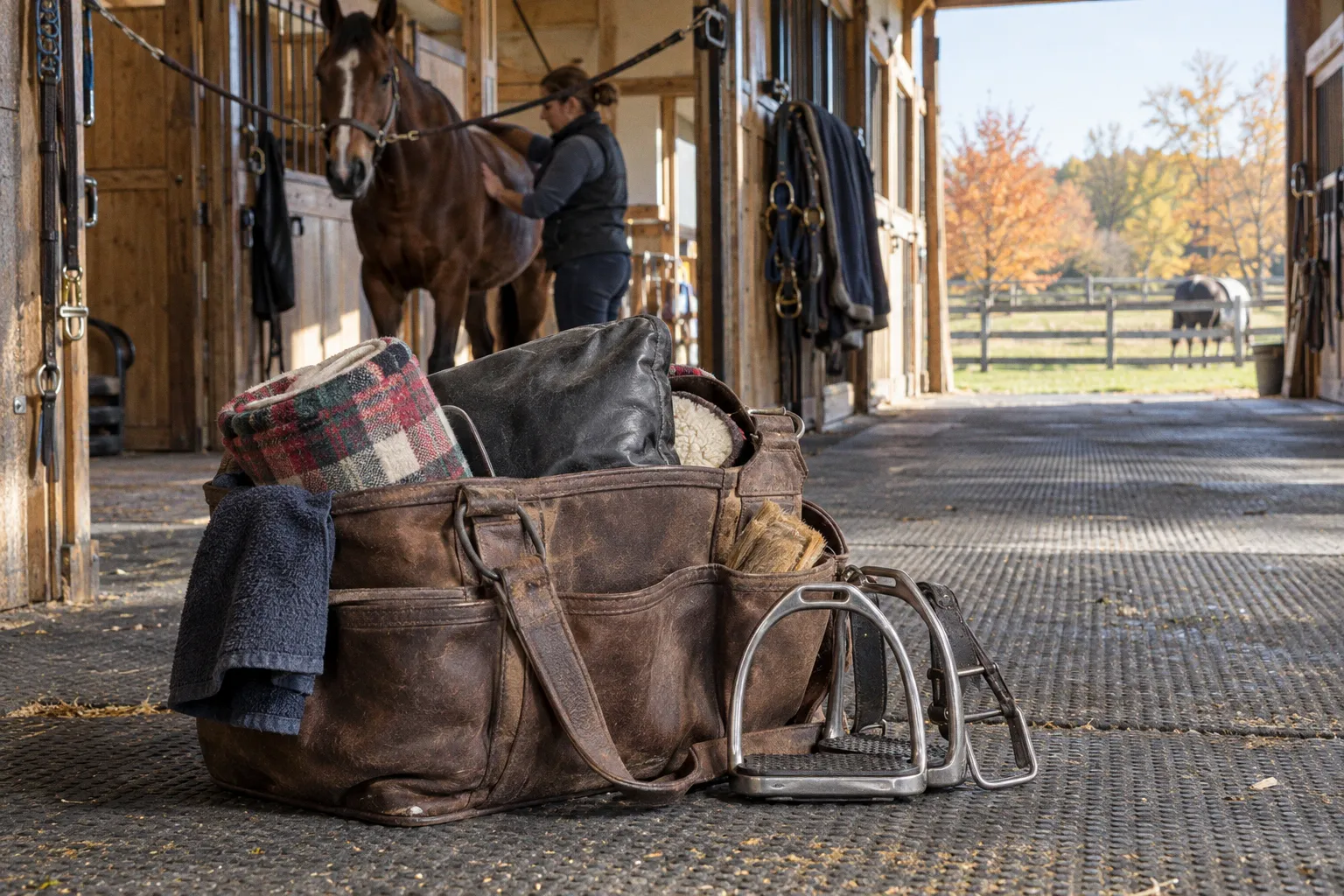
A gelding flinches when your thumb settles on his shoulder. A mare clamps her tail the moment your palm reaches her lower back. A young horse reads every approach like a warning, ears flickering before you have even made contact.
These are the moments in the barn when the question of equine shiatsu pressure intensity for sensitive horses stops being academic and becomes immediate. The difference between a body that softens and a body that braces may be almost imperceptible, but it is found through gradual adjustment, not through a fixed measure of force.
I have spent enough years with my hands on horses to know that pressure is never just a number on a scale. It is a conversation. The meridian system responds not only to how hard you press, but to how attentively you listen, and nowhere is that more obvious than with a sensitive horse who has already learned that human touch can sometimes mean something uncomfortable. If you have ever watched a horse hold his breath when you approach with intention, you already understand why calibrating pressure is one of the most important skills in equine bodywork.
The Language of Touch: Interpreting Equine Meridian Sensitivity
Sensitivity in horses is rarely just a problem of the skin. It is the visible edge of a deeper story, written into the fascia, the paraspinal muscles that guard the spine, and the meridian pathways associated with physical load and emotional tension. When I palpate a sensitive horse for the first time, I am not simply asking where it hurts. I am asking, with my fingertips, what the body is protecting and how much trust the horse is able to offer today.
That question cannot be answered by pressure alone. It begins with observation.
Meridian sensitivity shows up in places owners do not always expect. Sometimes it is obvious, appearing around the poll, the withers, or the lumbosacral junction. Other times it lives further down the body, in the superficial fascia along the inside of the forearm, in the thin tissue over the ribs, or along the lines that connect the forelimb to the hindquarters through the trunk. A horse who startles at a brush stroke across the triceps may be carrying tension through the thoracic sling, with the shoulder simply becoming the place where that line of strain surfaces.
This is why pressure calibration begins before contact. Before my thumb ever settles on a point, I am watching the eyes, the base of the ears, the soft tissue of the muzzle, and the way the ribcage expands and falls. A horse in a low-grade sympathetic state may breathe shallowly, hold the topline high, and carry tension in the muscles of mastication. A horse moving toward a parasympathetic state may lower the head, lengthen the spine, and allow the breath to find its full range again.
These signs are not a diagnostic system on their own. They are context. A horse may lower the head because he is relaxing, but he may also lower it because he is tired, distracted, or attempting to avoid contact. The practitioner has to read the whole animal: breathing, posture, facial expression, muscle tone, weight distribution, and the timing of each change. One isolated response is rarely enough to tell you whether the touch is welcome.
For practical observation, I tend to divide equine meridian sensitivity signs into three broad groups:
- Anticipatory signs: the horse braces before contact, raises the head, tightens the muzzle, shifts weight away, or watches the approaching hand closely.
- Contact signs: the horse flinches, steps away, swishes the tail sharply, pins an ear, tightens a muscle, or changes the rhythm of breathing once the hand arrives.
- Integration signs: the breath lengthens, the eye softens, the jaw releases, the neck lowers, or the weight settles more evenly after the contact has been maintained.
The timing matters. A horse who moves away before the hand arrives may be responding to expectation rather than to the actual pressure. A horse who softens at first and then braces as the contact deepens is giving a clearer instruction: the location may be acceptable, but the intensity or duration has gone too far.
The opposite can also happen. A horse may remain still while becoming increasingly rigid. Stillness is not the same as consent, and a quiet horse is not automatically a relaxed horse. Look for breathing and muscle tone alongside movement. If the body has become fixed, the hand needs to become lighter even if the horse has not stepped away.
Pressure is not something you do to a horse. It is something you negotiate with one, breath by breath.
Graduated Pressure: From Off-Body Connection to Deep Thumb Work
The word shiatsu itself is a small instruction. Shi means finger, and atsu means pressure. The discipline is built around the idea that the practitioner's hand is an extension of attention rather than an instrument of force. With sensitive horses, this idea becomes the entire practice, because intensity that arrives too quickly can overwhelm the nervous system and shut down the very response we are trying to encourage.
I teach every horse owner and student to begin the way I begin: off-body. Hold your hand above the coat and let the horse register your presence without being immediately asked to accept physical contact. The exact distance is less important than the quality of the approach. The hand should not hover tensely or advance with the expectation that the horse must remain still. It should arrive slowly enough for the horse to notice, assess, and respond.
Watch for the small signs that say the horse is aware of you without becoming alarmed: a softened eye, a deeper exhale, a slight drop of the head, a quieter muzzle, or a more settled distribution of weight. These signs do not mean the horse has given blanket permission for every technique. They simply indicate that the first stage of the conversation is going well.
The first real contact is intentionally light. A flat palm, fingers softly together, resting rather than pressing, allows the horse to feel the weight and temperature of the hand before any stronger intention is added. Do not rush through this stage because it seems too simple. For a horse who anticipates discomfort, predictable stillness may be more therapeutic than a clever sequence of points.
From there, pressure is built in stages. The hand can become more present without becoming harder. The practitioner may gradually increase the amount of weight offered through the palm, pause, and then watch what changes. If the horse remains soft, the contact can continue. If the horse braces, the answer is not to hold the pressure until the resistance disappears. Reduce the intensity, wait for the breath to return, and reassess the approach.
When the thumb arrives at a point, it should not feel like a stake being driven into the ground. It is a slow sinking, the kind of gradual deepening that gives the tissue time to respond. The thumb can move into the tissue only as far as the horse remains able to participate.
Gentle thumb pressure on an acupressure point should generally be held for at least 30 seconds, provided the horse remains comfortable and available. That minimum is not a command to maintain the same pressure regardless of what the horse communicates. It gives the point and the nervous system enough time to register a steady, gentle contact, while the practitioner continues to monitor breathing, facial expression, posture, and muscle tone.
If the horse stays soft, the thumb can remain quietly present for that period or longer, without repeatedly probing or increasing force. If resistance appears before 30 seconds—a held breath, sudden bracing, tail clamping, evasive movement, tightening around the mouth, or a clear attempt to leave—the pressure should be reduced immediately. Move back to a lighter touch, broaden the contact with the palm, or step off-body for a few breaths. The 30-second guideline supports patient work; it does not override the horse's feedback.
This distinction matters. A fixed duration without observation can become another form of pressure. A responsive minimum allows the practitioner to avoid rushing while still respecting the horse's limit. Gentle does not mean vague or hurried. It means steady enough to be felt, light enough to be processed, and adaptable enough to change when the horse says that the current approach is too much.
There is no standardized force measurement that tells you exactly how much pressure a sensitive horse should receive. Shiatsu thumb pressure guidelines for horses can describe direction, pacing, and observation, but they cannot replace feedback from the animal in front of you. Hand size, tissue condition, location, posture, previous injury, age, temperament, and the horse's experience with touch all change the meaning of the same physical input.
For sensitive horses, the rule I return to is simple: change one variable at a time.
1. If you are deepening pressure, keep the location and rhythm steady. This makes it easier to see whether the horse is responding to depth rather than to movement.
2. If you are changing from palm contact to thumb contact, do not increase intensity at the same moment. Let the horse experience the new tool before asking for anything more.
3. If you move to another area, return to a lighter contact first. A new region of the body may have a different tolerance, even if the previous area accepted deeper work.
4. If the horse becomes uncertain, go back to the last point of ease. The best adjustment is often a retreat to a familiar, comfortable contact rather than a new technique.
5. If resistance appears during the 30-second hold, release depth before releasing attention. Keep the connection calm, but make the physical input smaller.
The nervous system reads a single, predictable shift as easier to process. It may read several simultaneous changes as a threat. For that reason, good bodywork often appears slower than expected. The practitioner is not trying to win an argument with guarded tissue. The practitioner is creating enough consistency for the tissue to stop defending itself.
Notice how the tissue responds under your thumb. Yielding is information. Bracing is information too—and it is the louder of the two.
A common mistake I see in new practitioners is the urge to get somewhere with pressure, to push deeper because the surface feels guarded. But tissue may guard because the deeper layer is already overloaded, and adding force simply recruits more protective tension. In equine meridian therapy, the right depth is not necessarily the depth at which you feel you have reached the muscle you wanted. It is the depth at which the horse can remain present, breathe, and respond.
Sometimes the most useful work happens in the superficial fascia, where the contact is clear enough for the nervous system to process without triggering another layer of defence. The point is not to prove that a particular technique can be tolerated. The point is to find the level of contact at which the horse can participate in the change.
Reading the Parasympathetic Shift: Signs of Release and Relaxation
If pressure is the question, the parasympathetic shift is part of the answer. Learning to recognise it is what separates mechanical bodywork from responsive bodywork.
The autonomic nervous system has two broad branches: the sympathetic system, which prepares the body for action, and the parasympathetic system, which supports rest, recovery, and digestion. A sensitive horse may spend a great deal of time in a state of alertness, particularly if previous handling, pain, training, or environmental stress has made human contact difficult to predict. The aim of gentle bodywork is not to force the horse into relaxation. It is to make relaxation possible.
Every quiet yawn, soft sigh, and lowering of the head may be a small shift toward that state. So may a release through the jaw, a longer exhale, a subtle tremor through a previously tense muscle, or the slow settling of the back beneath the hand. These responses are meaningful because they show that the horse is processing the contact rather than simply enduring it.
I look for several markers throughout a session:
- Breathing: The exhale becomes longer or deeper, and the ribcage moves with less restriction.
- Eyes and ears: The eye softens, the eyelids become less fixed, and the ears move without remaining locked on the practitioner.
- Muzzle and jaw: The lips loosen, the nostrils become less tense, or the horse begins to lick and chew.
- Posture: The head and neck lower, the topline loses some of its bracing, and the horse stands with less effort.
- Weight distribution: The horse settles more evenly instead of repeatedly shifting away from the hand.
- Muscle response: A held area may quiver, ripple, or gradually become less resistant under the contact.
A single sign is a hint. A cluster of signs appearing in relation to a particular touch is more useful feedback. If the breath lengthens when the hand rests on one area, maintain the quality of contact rather than immediately searching for another point. Let the horse integrate the change. There is no prize for covering more territory.
The parasympathetic shift can be fragile, especially in a horse who has spent years compensating. Moving too quickly, changing tools without warning, or increasing pressure because the horse appears relaxed can interrupt the response. Relaxation is not an invitation to take more. It is a reason to become more attentive.
Reading equine feedback during bodywork also means noticing what is not happening. A horse who has stopped moving is not necessarily relaxed; sometimes he has frozen. A horse who stands perfectly still while you work may simply be too shut down to respond. The horses I worry about most are the ones who have learned to be very quiet under pressure because quiet was once their safest option.
This is where the practitioner's interpretation must remain humble. Licking and chewing can accompany release, but they can also occur for other reasons. A lowered head may indicate comfort, fatigue, or an attempt to avoid contact. The meaning of each sign comes from the larger pattern: when it appears, what the rest of the body is doing, and whether the horse remains available for the next moment of interaction.
A useful pause is often more revealing than another technique. Stop the movement while keeping the hand quiet, then observe whether the horse stays connected, leans subtly into the contact, drifts away, or becomes tense in anticipation of the next touch. The response during the pause can show whether the previous contact was integrating or merely being tolerated.
For these horses, gentleness is not a decorative quality. It is the only doorway in.
Navigating Resistance: When to Reduce Intensity or Change Approach
Not every session goes smoothly, and not every moment of contact produces softening. Resistance is information, and the practitioner's job is to read it as carefully as a change in gait or a new line of sweat beneath the saddle.
When a horse moves away from pressure, pins an ear, raises the head, clamps the tail, steps back, tightens the muzzle, or suddenly changes the rhythm of breathing, the first response should usually be to reduce rather than push through. Resistance does not automatically tell you that the point is wrong. It tells you that the current way of reaching it is not working for the horse at that moment.
The first adjustment is to lighten. Take pressure off without necessarily abandoning contact, allowing the hand to remain quiet and supportive on the surface. Give the nervous system time to recalibrate. If the resistance persists, move off-body for a few breaths, restoring the sense of connection without the immediate demand of touch.
From there, change only one element. You might move from thumb to flat palm, from a working point to a supporting hold along the meridian line, or from still pressure to slow rhythmic rocking. A broader hand often feels less intrusive than a single thumb. A moving contact may be easier for some horses than a fixed one, while for others movement creates more uncertainty. There is no universal substitute; the horse's response determines the next step.
Sometimes the issue is not pressure at all but timing. A horse who resists at the beginning of a session may accept the same contact later, once the body has had time to settle into the work. Conversely, a horse who accepted a technique during a previous visit may reject it on a day when he is sore, tired, anxious, or distracted by the environment. The same horse does not arrive with the same nervous system every day.
This is one reason an initial equine shiatsu session may run longer than a follow-up. The beginning of the session is not wasted time. It may be spent establishing safe contact, observing the horse's baseline, and earning permission for more specific work to happen. The exact duration should remain flexible rather than treated as a target the horse must tolerate.
The same principle applies within a session. Do not assume that because a horse accepted a point for 30 seconds, he is ready for a deeper point nearby. Acceptance is local and moment-specific. Return to a light palm or off-body connection when moving to a new region, then build again from the horse's current response.
A practitioner should also distinguish between ordinary resistance and a possible medical problem. Sudden behavioural change, acute pain, marked lameness, neurological symptoms, unusual weakness, or a reaction that is disproportionate to the touch should not be managed by simply trying a gentler technique. The bodywork is not the priority in that moment; veterinary assessment is.
Equine shiatsu and veterinary medicine are partners, not substitutes. Local rules and professional requirements may also call for veterinary consent before bodywork is provided. Respecting that boundary protects the horse and the trust on which the work depends. It also prevents the practitioner from turning a new symptom into a training or relaxation problem.
When the horse says “not today”
There are days when the correct adjustment is to do less. A horse may be unsettled by noise, weather, unfamiliar people, recent travel, a demanding ride, or discomfort that has not yet been identified. The responsible choice is not always to find a more inventive technique. Sometimes it is to offer quiet contact, finish early, and leave the horse with a clear experience of being heard.
This does not mean every avoidance response should end the session immediately. Horses can be startled, uncertain, or unused to a new form of touch. The practitioner can give the horse space to understand the contact while keeping the interaction calm. The deciding factor is whether the horse becomes more available with reduced intensity or progressively less available.
That distinction is central to adjusting shiatsu touch for nervous horses. A nervous horse may need more time, not more persuasion. If the horse can breathe, orient to the practitioner, and gradually return to a softer posture, the session may continue at a lower level. If the horse continues to escalate, the work has already become too demanding.
Structuring the Session: Timing and Frequency for Lasting Results
A sensitive horse benefits from a session with a recognisable shape. The sequence does not need to be rigid, but the horse should be able to understand how contact begins, how it develops, and how it ends.
I prefer to think in phases rather than in a race to complete a list of points:
1. Arrival and observation: Notice the horse's posture, breathing, movement, facial expression, and willingness to orient toward the practitioner.
2. Off-body connection: Allow the horse to register the hand before asking for direct contact.
3. Broad contact: Use a quiet palm or other non-specific hold to establish comfort and assess the body's general response.
4. Specific work: Introduce selected points or meridian contacts gradually, using gentle thumb pressure only where the horse remains receptive.
5. Integration: Return to broader, lighter contact and allow the horse time to settle before the session ends.
The specific work should not dominate the entire session. A point may be important, but the horse's capacity to receive it is equally important. If a gentle thumb hold has been maintained for at least 30 seconds and the horse remains soft, the practitioner can decide whether to continue briefly, release gradually, or move on. If resistance appears, the point is not a test of endurance. Reduce the intensity and let the horse's response guide the next step.
A session is also shaped by what happens immediately before it. A horse who has just finished strenuous exercise may present differently from one who has been standing quietly. The same is true after feeding, transport, turnout, or a stressful handling experience. The practitioner does not need to eliminate every variable, but should recognise that the starting point changes.
Frequency should be approached with the same restraint as pressure. More frequent work is not automatically more therapeutic. A horse may need time to process a session, particularly if the bodywork has revealed areas of long-held tension or produced a noticeable change in posture and movement. The appropriate interval depends on the horse's response, overall health, workload, and the purpose of the work.
For some horses, regular gentle contact helps build familiarity before any more specific technique is introduced. For others, a shorter session with more recovery time is the better fit. Watch what carries over into the following hours and days: ease of movement, willingness to be handled, changes in posture, or signs of increased sensitivity. A delayed increase in discomfort or behavioural change should not be dismissed as a necessary part of releasing tension.
Keeping simple notes can help without turning the relationship into a spreadsheet. Record the areas approached, the type of contact used, the horse's main responses, and how the horse seemed later. Over time, patterns may emerge. A horse may consistently accept palm contact but resist thumb work in one region. Another may tolerate a point after a longer off-body phase. These observations are more useful than a universal pressure chart because they belong to the horse in front of you.
The strongest sessions often look uneventful from the outside. There may be no dramatic release, no large movement, and no long list of points completed. Instead, there is a horse who breathes more freely, stands with less effort, and remains engaged with the person at his side. That is not a small result. For a sensitive horse, trust is part of the treatment environment.
Finding the Useful Middle Ground
Equine shiatsu pressure intensity for sensitive horses is not about choosing between feather-light contact and deep technical work. It is about knowing when each level has a place. Off-body connection can be the right beginning. A palm can be more informative than a thumb. A gentle thumb hold may need at least 30 seconds to be fully received, but only while the horse remains comfortable enough to participate. If that comfort changes, the practitioner changes with it.
The most reliable guide is not the amount of pressure the practitioner wants to apply. It is the horse's ability to stay present under that pressure. Breathing, posture, muscle tone, facial expression, weight distribution, and the timing of each response tell the story together.
Sensitive horses do not need to be persuaded into relaxation. They need a form of contact that leaves room for choice. When the hand listens as carefully as it works, pressure becomes less of an intervention and more of a conversation—and the horse has a genuine opportunity to answer.