Mastering Self-Carriage: Why Your Horse Needs Balance in Motion to Thrive
Camp, writing for The Plaid Horse, this kind of postural hesitation often points to a missing skill: self-carriage, what she calls balance in motion.
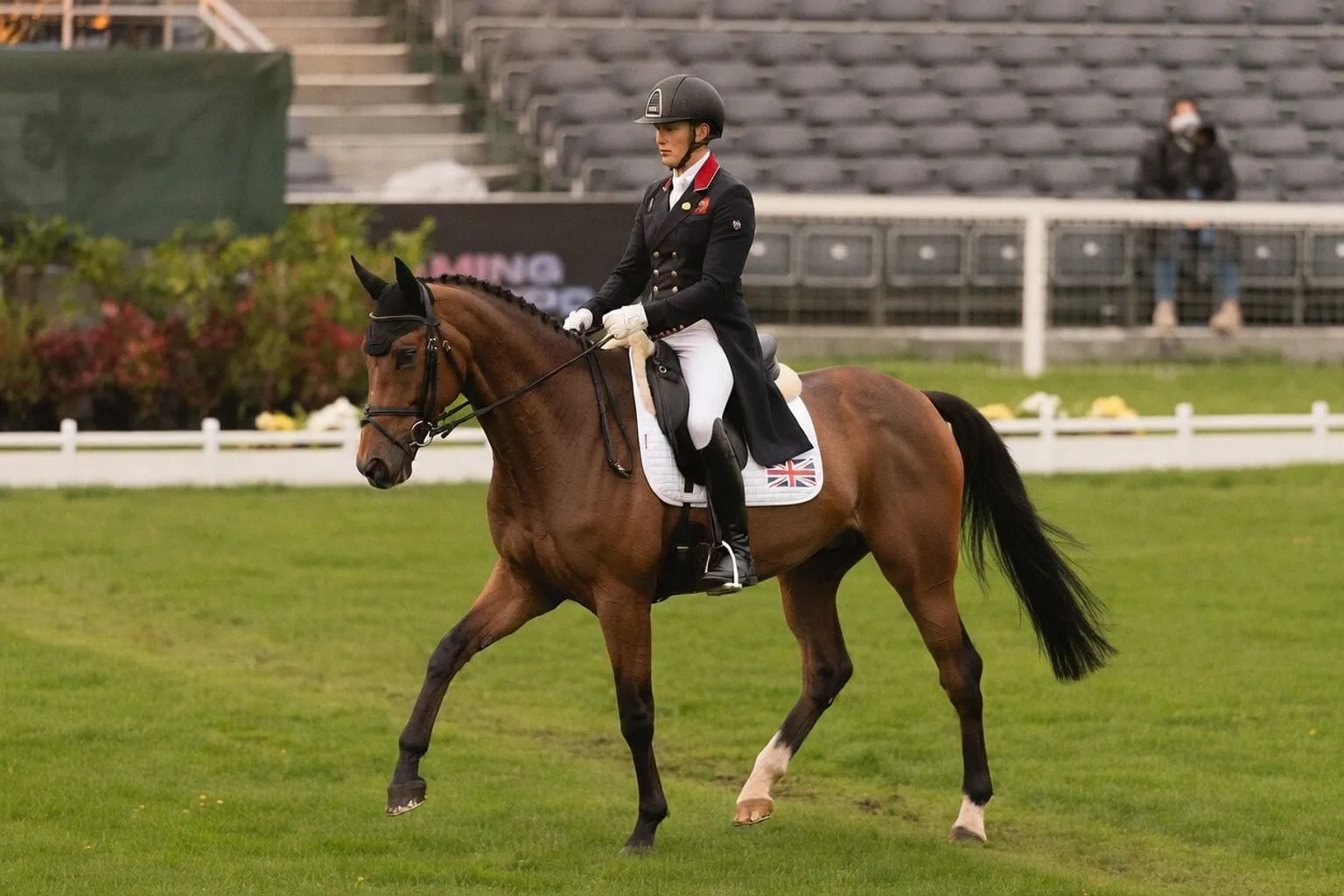
When I watched a horse hesitate at the threshold of the mounting block last spring, shifting weight from foreleg to foreleg in that quiet, tight rhythm, I knew something in the tissue was holding a story the rider hadn't read yet. According to equine posture specialist Nancy K. Camp, writing for The Plaid Horse, this kind of postural hesitation often points to a missing skill: self-carriage, what she calls balance in motion. It is, she explains, the horse's ability to engage core musculature, lift the back, and rebalance weight off the forehand so the hindquarters can truly support a rider. This is not a dressage luxury. It is the foundation of ethical riding, and when it is absent, compensations ripple through every meridian I work along.
What the body tells you under your thumb
Camp describes how horses naturally carry about sixty percent of their weight on the forehand, a clever survival pattern for a grazing animal, but one that hollows the back and tightens the long muscles of the topline once a rider is added. When you palpate along the thoracic region of a horse who has never been taught to carry himself, notice how the tissue meets your hand with a guarded, braced quality rather than a yielding spring. The epaxial muscles are doing the job of skeleton, and they grow tired and sour. This is the pattern I see repeated in nearly every horse who arrives in my practice with behavioural resistance under saddle. Their bodies are telling them they cannot safely bear the load, and no amount of patient riding will override that signal until the core learns to engage.
A felt understanding, not a forced shape
What I appreciate most about Camp's analysis is her invitation to get down on your own hands and knees and feel it. When you tighten your belly, your back lifts and your weight shifts toward your knees, and suddenly you understand what you are asking of the horse. This is the bridge between rider bodywork and equine bodywork, because we can feel what we are guiding them toward. When the abdominals draw inward, the centre of gravity steps back, the hindquarters sink and load, and the front end lightens. The parasympathetic state follows naturally. Release cascades through the poll, through the shoulder, along the bladder meridian. Tension patterns that lived in the body begin to dissolve, not because we forced them, but because the horse has finally found a way to hold himself that does not cost him his comfort.
What to watch for in your own barn
Start with quiet observation before you ever touch a hand to the body. Does your horse fall in on circles? Struggle with a specific lead? Tickle poles you know he should clear? These are not training failures. They are postural requests the body has not yet learned to answer. When I work with a horse in this pattern, I begin at the ground, inviting the hindquarters to step under with gentle pressure along the hip and sacral points, then move to the abdominal sling where the real lifting work begins. Pair this with the rider's own core awareness, and the shift becomes shared, breath by breath, step by step. This is the work that turns a horse who merely tolerates being ridden into one who moves with ease, with style, and with that beautiful, subtle shift of weight that tells you the back has finally risen to meet you.