Detecting Equine Skeletal Stress Through Blood Markers and Scintigraphy
And that story, according to the Paulick Report's coverage of a new study in the Equine Veterinary Journal, is exactly what researchers have been trying to read earlier — before the limp announces itself in the ring.
When you watch a horse shift its weight off the left fore at the trot, or catch the subtle hitch your hands feel when you run them slowly down the shoulder, you're often reading the same chapter of a longer story. And that story, according to the Paulick Report's coverage of a new study in the Equine Veterinary Journal, is exactly what researchers have been trying to read earlier — before the limp announces itself in the ring.
Reading the bone before it speaks
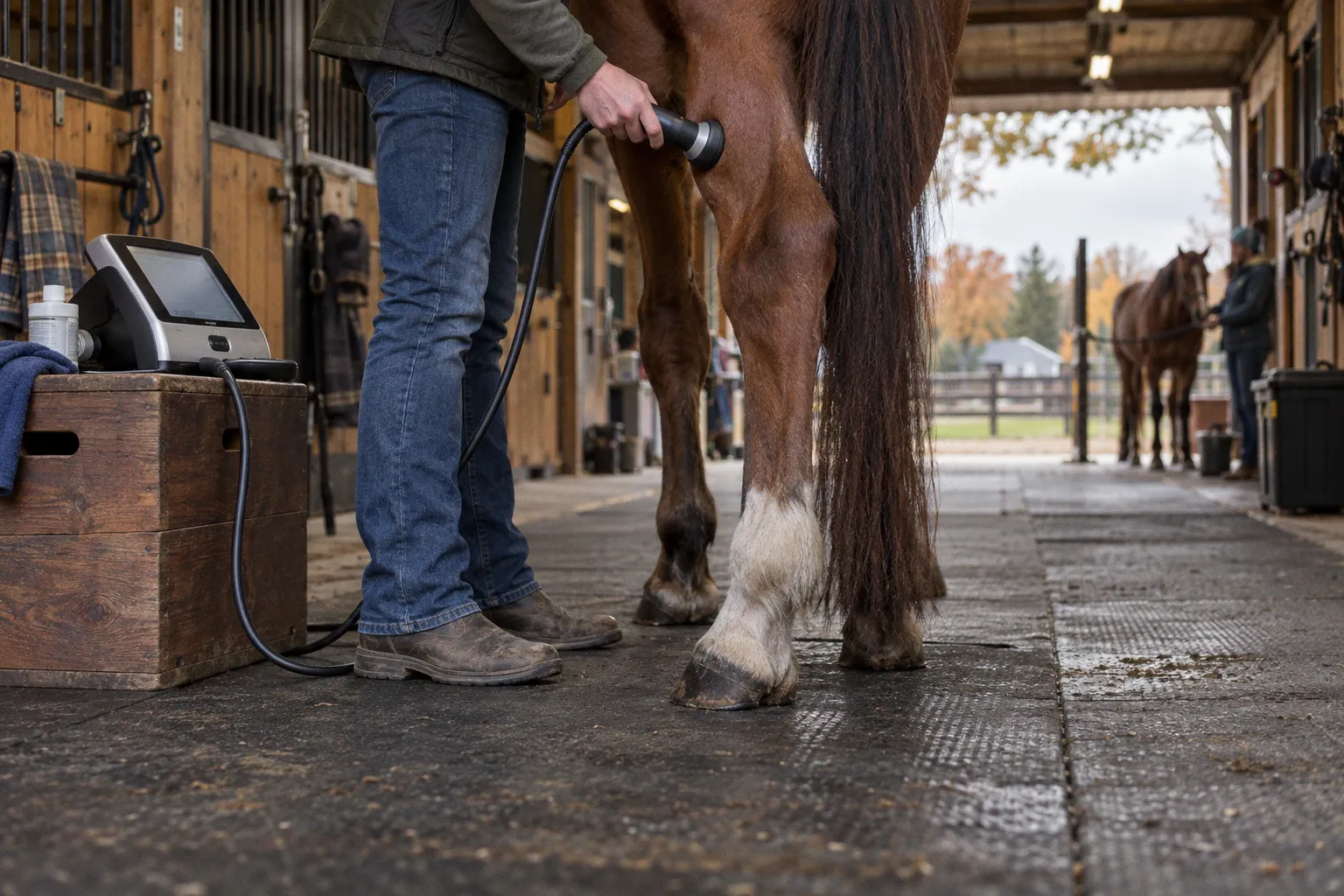
The work, as the Paulick Report notes, paired blood markers linked to bone turnover with nuclear scintigraphy to sharpen early detection of skeletal stress and injury. Blood markers can hint at what the skeleton is actively remodeling in real time; bone scans map where that remodeling is concentrating. Together, the researchers suggest, the two tools fill in each other's blind spots — the chemistry of change paired with a picture of place.
Think of it the way your thumb reads tissue. Palpation tells you where the fascia is dense, where tension is held, where the horse quietly guards a stretch. The diagnostic tools do something similar at the level of bone — they name where the body is already working overtime to repair itself, often well before a visible lameness shows up on the lunge line.
What this means at the barn gate
For the bodyworker, this kind of research is quietly validating. We have long been taught to trust the soft signs: the uneven sweating pattern beneath the saddle, the back that hollows when you press beside the withers, the hindquarter that will not soften through the lumbar even after a full minute of sustained contact. Each sign is a tissue asking a question. What the study points toward is a future where those hands-on cues sit alongside lab tools that name what is happening beneath them.
In practical terms, this is worth keeping close. A horse that pulls away from shoulder palpation, or carries a low-grade tension pattern through the deep digital flexor, deserves a closer look from the whole care team — not just the hands-on one. The work I do can support circulation and invite a parasympathetic shift, but bone stress lives in a territory I cannot feel directly. Diagnostic imaging and bloodwork belong in the conversation early, not after the horse is already off. Sharing that framework with clients, gently and without alarm, often opens the door to a swifter vet referral than waiting for the lameness to declare itself.
What to keep on your radar
For now, the Equine Veterinary Journal paper is the headline. Worth tracking: which specific markers the team settled on, how large the study population was, and whether any thresholds for "at risk" horses emerged. For those of you who train or care for race-fit horses, it is reasonable to ask your veterinarian whether a baseline blood panel makes sense before the heavy work of the season. And hold the space between sessions with what you already trust — a body under stress asks for yielding, not pressure. Give it room, and the rest of the story tends to unfold gently.