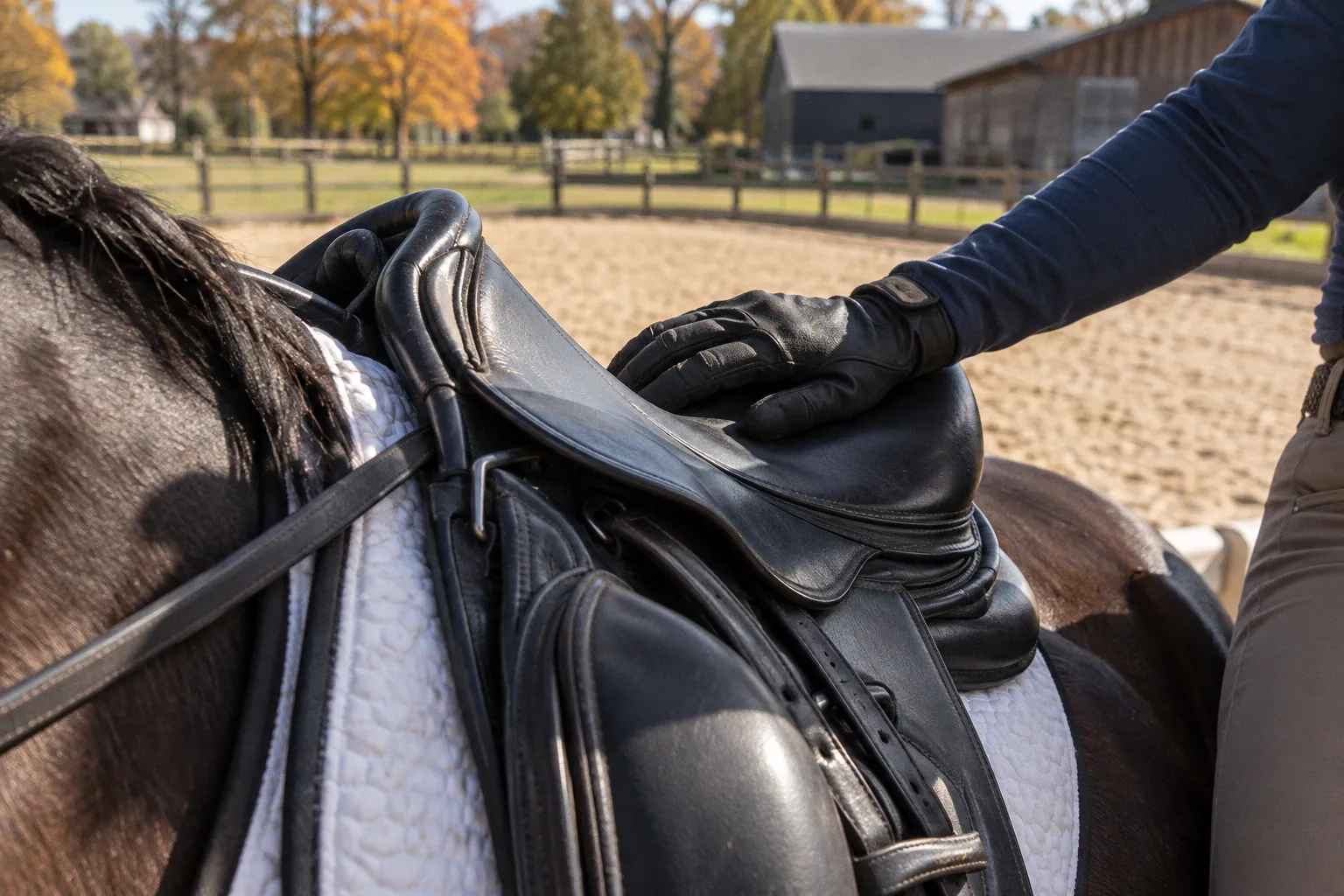
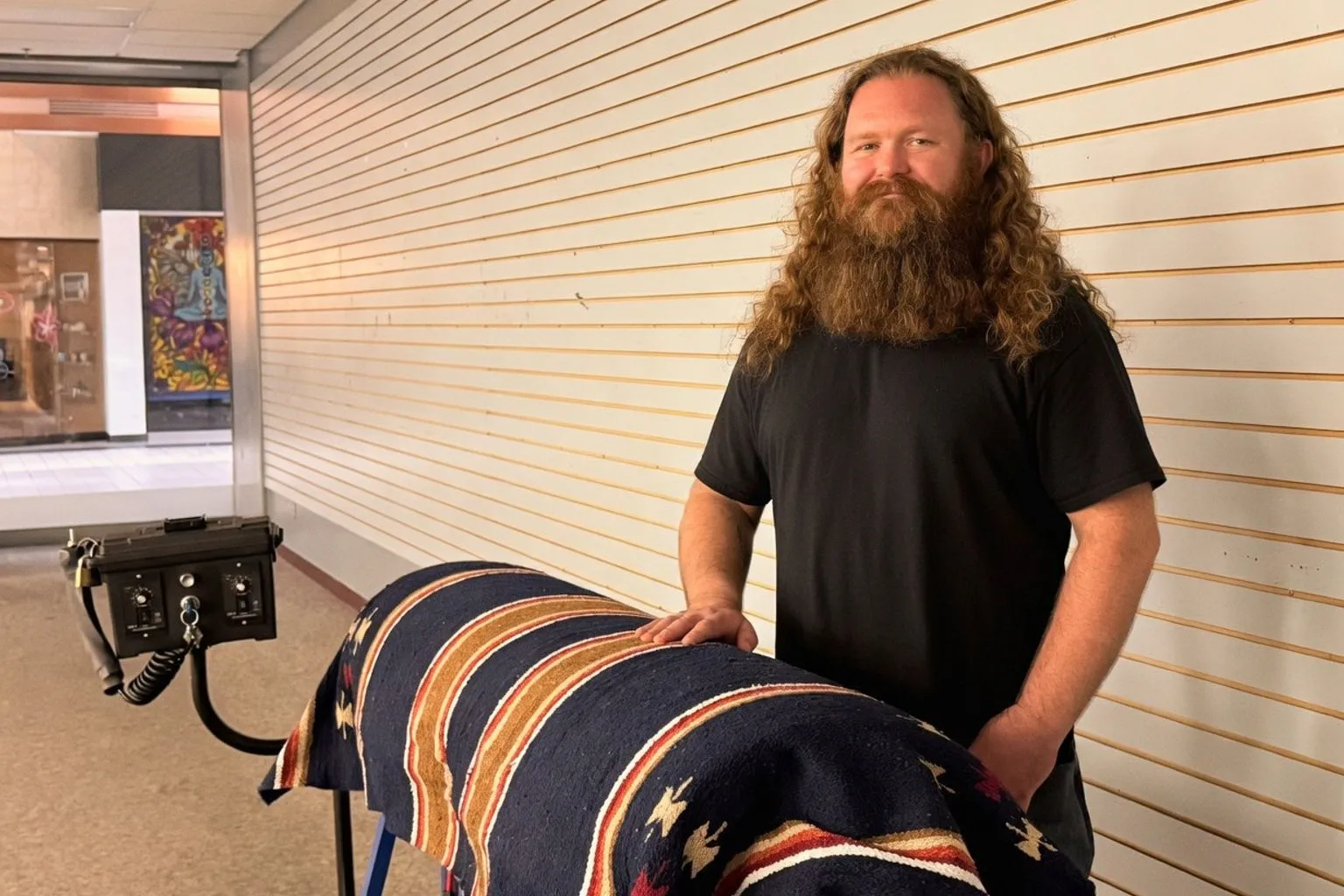
Your horse is not the reason you keep collapsing through one hip.
Maybe the saddle feels crooked. Maybe the right shoulder creeps forward, your pelvis rolls into a posterior tilt, and your lower leg slides back by the end of the session. You correct it for three strides. Then the old pattern wins.
That is where the comparison between rider somatic bodywork and physical therapy for posture becomes useful. Both approaches can improve alignment, body awareness, and movement quality. They do not do the same job, and neither one is a magic reset button for a rider who spends six days a week bracing through the same asymmetry.
Physical therapy is clinical rehabilitation. It evaluates pain, weakness, joint restriction, injury, and muscular imbalance, then builds a structured plan around those findings.
Somatic bodywork works through internal awareness, nervous-system regulation, habitual tension, and the way you sense and coordinate your body. It asks a different question: not only what is weak or restricted, but what has your nervous system stopped noticing?
That distinction matters in the saddle. You cannot hold yourself into a correct position forever. You need your body to organise the movement without constant emergency corrections.
Physical therapy starts with the problem you can measure
Physical therapy is the more direct route when posture problems sit alongside pain, injury, loss of strength, or restricted joint motion.
A qualified physiotherapist may assess:
- pelvic tilt and hip mobility;
- spinal and rib-cage movement;
- core and glute strength;
- shoulder and thoracic alignment;
- balance and weight distribution;
- joint range after injury;
- muscle recruitment during functional movement;
- the way pain changes your gait, breathing, or riding position.
This is not about being told to sit up straight. That advice is almost useless on its own. A rider can lift the chest while locking the lumbar spine, gripping the hip flexors, and pushing the ribs forward. The silhouette looks taller. The kinetic chain is still a mess.
Clinical rehabilitation targets the cause that the assessment identifies. If one hip lacks mobility, you work on that hip. If the deep abdominal system fails to stabilise the pelvis, you train it. If a shoulder injury has changed the way you carry your upper body, the programme addresses the injury instead of pretending the asymmetry is a bad habit.
The transverse abdominis is one of the muscles commonly discussed in pelvic control and trunk stability. But do not reduce core stability to endless abdominal bracing. A functioning riding core does not mean clenching your stomach until you cannot breathe. It means controlling the relationship between pelvis, rib cage, spine, and limbs while the horse moves underneath you.
That takes coordination.
What physical therapy can do well for equestrian posture
Physical therapy is particularly useful when your riding position is being shaped by a physical limitation rather than a simple lack of awareness.
It can help you:
1. Build strength where your body cannot currently stabilise itself.
Weak hip abductors, poor trunk control, or insufficient posterior-chain strength can let the pelvis drift and the leg lose position.
2. Restore motion after injury or prolonged guarding.
Pain changes movement. You may shorten one side of your body, hold your breath, or avoid loading a joint without realising it.
3. Separate mobility problems from control problems.
A hip may have enough range but poor active control. Or it may be genuinely restricted. Those require different strategies.
4. Progress the load safely.
A good rehabilitation plan moves from simple controlled exercises to more demanding patterns, then into sport-specific movement.
5. Connect off-horse work to riding demands.
The final target is not a perfect exercise mat performance. It is a pelvis that stays organised when you post, sit, turn, absorb a transition, or ride through uneven movement.
For riders dealing with persistent back pain, post-injury weakness, or neurological symptoms, clinical assessment comes first. Somatic work can support awareness and reduce habitual tension, but it should not replace medical physical therapy for acute trauma or structural spinal problems.
Somatic bodywork addresses the tension you keep recreating
Now the uncomfortable part: sometimes your muscles are not simply weak. They are overworking because your nervous system has learned to organise movement around protection.
You brace before the horse spooks. You clamp the inner thigh before a transition. You pull the shoulders back because you fear being left behind. You tuck the pelvis because neutral feels exposed and unstable.
Then you call the resulting stiffness a posture problem.
Somatic bodywork focuses on internal sensation, breathing, movement awareness, and the release of habituated muscular holding patterns. Sessions may involve a posture and movement assessment off the horse, fully clothed hands-on work, guided breathing, and gradual exploration of how your body responds to pressure, movement, and attention.
The goal is not to force your pelvis into a position and keep it there. The goal is to improve your ability to sense what the pelvis is doing and change it without creating a new layer of tension.
This is where somatic therapy for horse riders can be valuable. A rider may understand the instruction to lengthen the left side, soften the hip, or allow the ribs to stack over the pelvis. But understanding the instruction intellectually does not mean the body can execute it.
You need a usable signal.
Sensory-Motor Amnesia: the pattern you no longer notice
Hanna Somatic Education uses the term Sensory-Motor Amnesia, or SMA, to describe a habituated state in which a person loses clear awareness of how certain muscles feel and how to coordinate them effectively.
You do not necessarily feel the contraction because it has become ordinary. Your body has filed it under normal.
That is why a rider can insist that both feet are equal while one heel is higher, one hip is lifted, and one shoulder is rotating forward. The body is not lying. It is reporting from a distorted baseline.
Repeated posture creates repeated sensation. Repeated sensation starts to feel neutral.
If your asymmetry feels normal, “just sit evenly” is not a correction. It is an instruction your nervous system may no longer know how to follow.
Somatic work slows the process down enough for you to detect the difference between effort and unnecessary holding. You may notice that your jaw tightens when you prepare to sit a transition. You may feel the ribs flare when you try to lengthen the spine. You may discover that “relaxed” has actually meant collapsed.
That information matters. You cannot change a pattern you cannot feel.
Somatic bodywork versus physical therapy: two different jobs
The easiest way to understand the rider somatic bodywork vs physical therapy for posture debate is to stop treating the approaches as rivals.
Physical therapy asks: What is not functioning well, and what intervention will restore capacity?
Somatic bodywork asks: What is your nervous system habitually organising, and can you perceive and release the pattern?
Both questions belong in rider biomechanics.
| Area | Physical therapy | Somatic bodywork |
|---|---|---|
| Primary focus | Injury, weakness, joint mobility, muscular imbalance, functional rehabilitation | Internal awareness, nervous-system regulation, habitual tension, movement coordination |
| Typical starting point | Clinical assessment and movement testing | Posture, movement, breathing, and body-awareness assessment |
| Main tools | Strengthening, joint mobilisation, corrective exercise, manual therapy, progressive loading | Hands-on awareness work, guided breathing, slow movement, sensory tracking |
| Best suited to | Pain, injury recovery, measurable weakness, restricted motion, loss of function | Chronic bracing, poor body awareness, recurring tension, difficulty sensing asymmetry |
| Riding integration | Sport-specific rehabilitation and movement retraining | Off-horse awareness followed by mounted integration and timing work |
| Main risk if used badly | Over-focusing on isolated muscles or forcing correction | Treating a medical injury as though awareness alone will solve it |
The overlap is real. Modern physical therapists may use breathing, mindfulness, somatic coaching, and nervous-system education. Somatic practitioners may use movement assessments and posture analysis. The labels do not create a clean wall between the two.
The difference lies in emphasis and clinical scope.
A posture brace or strap sits on neither side of this comparison in any meaningful way. Passive posture correctors may cost roughly $30 to $80, but wearing a device does not build active control, improve body awareness, or teach your kinetic chain to organise itself under load. It can remind you of position. It cannot do the work for you.
The vertical line is a reference, not a pose
In riding, the familiar alignment concept places the ear, shoulder, hip, and heel on an imaginary vertical line when the pelvis is in a neutral position.
Useful? Yes.
A rigid target to force under every circumstance? No.
Your body has to adapt to the horse’s movement. A jump, a collected transition, a rising trot, and a long-rein walk do not demand identical angles. The vertical line gives you a reference for balanced alignment. It does not give you permission to freeze.
The most common mistake is trying to create the line from the top down:
- pull the shoulders back;
- lift the chin;
- push the chest forward;
- drive the heels down;
- clamp the thighs;
- brace the stomach.
Now you look organised and move like a plank.
Start at the pelvis. If the pelvis rolls backward, the upper body often compensates by collapsing or leaning. If the pelvis tips forward excessively, the ribs may flare and the lower back may compress. The shoulders, hands, and legs then chase the problem.
Your riding posture is a chain. Adjust one link and the others respond.
Use this quick off-horse test
Stand barefoot with your feet under your hips. Do not perform a heroic version of “good posture.”
Then check:
- Are your ribs stacked over your pelvis, or are they thrust forward?
- Is your weight spread across both feet?
- Can you soften your knees without collapsing?
- Does one hip sit higher or rotate forward?
- Can you breathe into the back and sides of your rib cage?
- Can you shift your weight from one foot to the other without gripping your toes?
- When you lengthen your spine, do you create space or simply arch your lower back?
Now walk slowly.
Not this: hold the pelvis still, tighten the stomach, and march with controlled stiffness.
Do this: allow the pelvis to move over the legs while maintaining a quiet rib cage and steady breathing.
That is the difference between active alignment and defensive bracing.
Where mounted integration changes the result
Off-horse work is essential, but it is not the finish line. You do not ride in a treatment room.
Equestrian somatic sessions often move from off-horse assessment and hands-on work into mounted integration. The point is to test whether the new awareness survives the actual demands of riding: rein contact, transitions, lateral movement, changes of tempo, and the horse’s uneven or reactive moments.
Physical therapy can use the same principle through progressive sport-specific rehabilitation. You may begin with a controlled pelvic exercise, then standing balance, then dynamic movement, then mounted work. The structure changes, but the logic remains: build capacity, then test it in context.
If you only practise alignment while lying on a mat, the horse will expose the gap.
Mounted integration should be specific. Test one change at a time:
1. Find neutral pelvis at halt without gripping the thighs.
2. Walk and notice whether the pelvis follows the horse or locks against it.
3. Ride a transition while keeping the jaw, hands, and breathing quiet.
4. Compare both reins without forcing the shoulders level.
5. Observe whether one leg braces when the horse bends.
6. Return to halt and identify what changed first: pelvis, ribs, shoulders, or breath.
You are collecting information, not chasing a perfect photograph.
This is also where blaming the horse falls apart. A horse may have genuine asymmetry, discomfort, saddle-fit problems, or a movement restriction. Those need investigation. But if the same rider tension appears on different horses, in different saddles, and under different instructors, the rider’s kinetic chain belongs in the conversation.
The horse cannot fix your pelvic tilt for you.
Choosing the clinical route, the somatic route, or both
Choose physical therapy first when pain is persistent, function has changed, or you are recovering from a known injury. Numbness, weakness, instability, significant trauma, and escalating symptoms are not invitations to experiment with a wellness routine. Get assessed.
Prioritise somatic education when you have plenty of strength but cannot stop over-controlling, when your posture changes under pressure, or when corrections disappear the moment the horse moves. It is especially relevant if you have spent years receiving the same instruction without developing a clearer internal sense of what the body is doing.
Combine them when the problem has two layers—which is common.
A rider may have restricted hip mobility and a learned habit of protecting that hip. Strengthening alone may improve capacity but leave the old bracing strategy intact. Somatic awareness alone may reveal the pattern without providing enough strength to hold a new position during work.
The combination is stronger:
- clinical assessment identifies the physical limitation;
- targeted exercise builds capacity;
- somatic work improves perception and reduces unnecessary holding;
- mounted practice teaches the body to apply the change under movement;
- regular reassessment stops you from repeating an outdated correction.
This is not about collecting therapies. More treatment is not automatically better. The plan needs a clear target.
Ask yourself:
- What exactly changes when I ride?
- Where does the asymmetry begin?
- Do I lack motion, strength, awareness, or confidence?
- Does pain appear before the posture changes, or after?
- Can I correct the position off-horse but not in the saddle?
- Am I creating stability through muscle control or through gripping?
- Does the horse change when I change, or only when the tack or training changes?
Those answers point you toward the right emphasis.
The off-horse work that makes the difference
Do not finish a bodywork session, nod thoughtfully, and then return to the same chair, the same driving posture, and the same one-sided phone habit.
Your nervous system learns through repetition. Give it better repetitions.
Try this short sequence on non-riding days:
- Lie on your back with your knees bent and feet supported.
- Notice whether one side of the pelvis feels heavier.
- Breathe without pushing the abdomen outward or forcing the ribs down.
- Slowly tilt the pelvis through a small range rather than holding one “correct” position.
- Pause where the lower back feels long, not flattened aggressively.
- Roll one knee a few centimetres outward and return it without letting the pelvis twist.
- Stand and repeat the vertical-line check.
- Walk for one minute while keeping your breathing quiet and your steps even.
No strain. No dramatic stretching. No chasing a sensation because it feels productive.
The aim is precision. You are teaching your brain to recognise options.
If you have a clinical diagnosis or current injury, adapt any exercise with your physiotherapist. Somatic movement should increase useful awareness, not provoke symptoms or encourage you to ignore them.
Rider biomechanics improvement methods are often sold as a new posture, a new gadget, or a stronger core. The deeper work is less flashy. You build an organised pelvis. You restore available movement. You stop asking overworked muscles to act as emergency stabilisers. Then you practise until the horse’s motion no longer wipes out the change.
The position is not the goal. The usable body is.
The best answer to the rider somatic bodywork vs physical therapy for posture question is not a universal winner.
Physical therapy is the stronger tool for injury, weakness, restricted mobility, and measurable loss of function. Somatic bodywork is the sharper tool for habitual tension, poor internal awareness, and patterns that feel so normal you no longer detect them. Many riders need both.
Do not chase the vertical line by force. Build the body that can find it, lose it, and return to it without panic.
Tonight, spend five minutes standing barefoot. Feel your feet. Stack your ribs over your pelvis. Release the grip in your jaw and thighs. Walk slowly. Notice which side tries to take over.
Then correct one thing—not everything.
That is how alignment becomes a riding skill instead of another instruction you abandon at the first transition.