Kerri Sowers on Why Rider Biomechanics Define Your Horse's Performance
Stockton University reports that certified neurologic physical therapist Kerri Sowers served as chief classifier for para dressage at the 2026 FEI World Championships in Aachen.
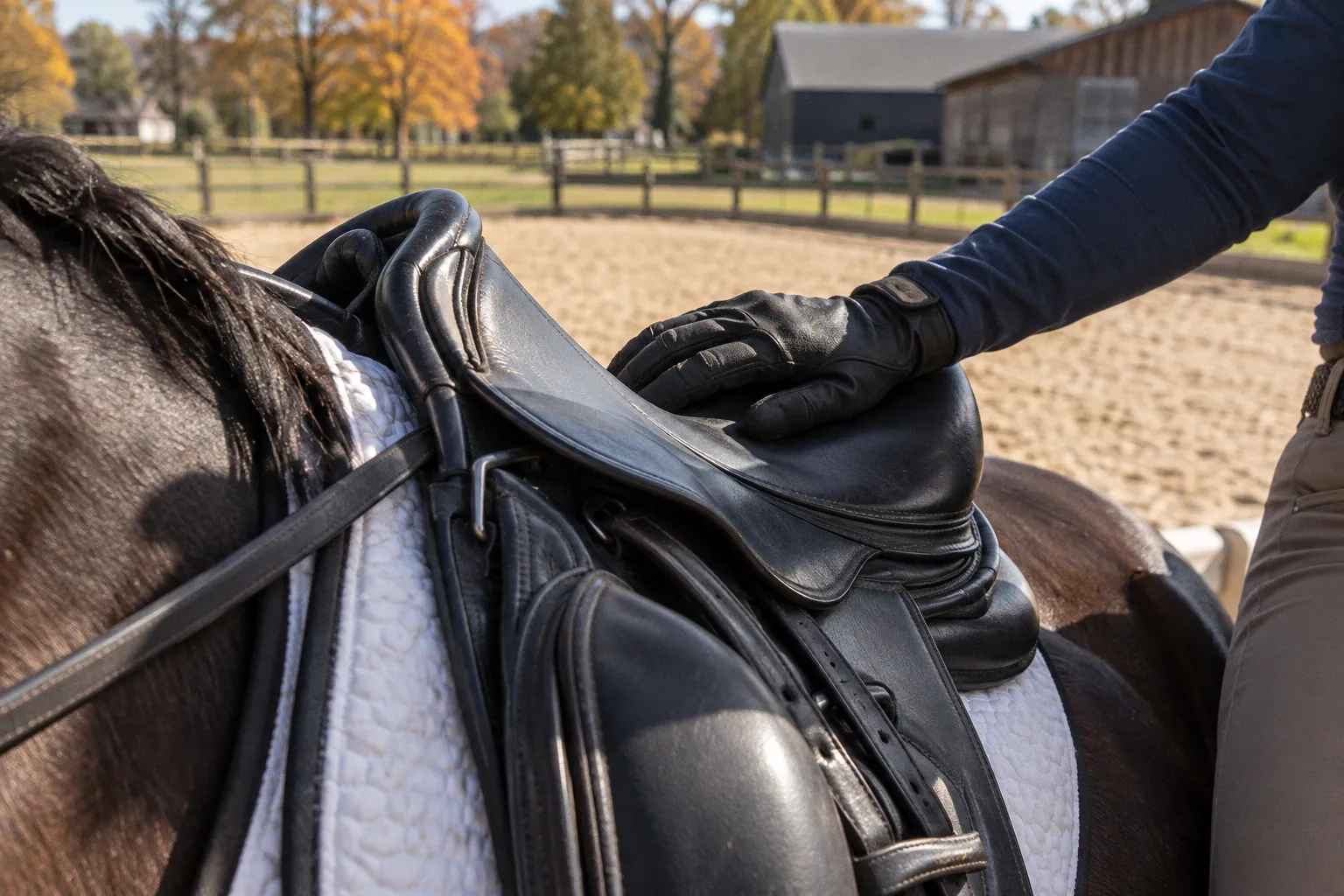
Her work puts the rider—not just the horse—under the biomechanics microscope, focusing on how physical impairment, posture mechanics, and athletic movement interact in the saddle. That matters in every discipline: a crooked pelvis or collapsing trunk can change the conversation before the horse takes a single bad step.
The rider is part of the movement problem
Stop treating rider asymmetry as a cosmetic issue.
Sowers’ role highlights a basic truth of para dressage and rider biomechanics: the body you bring to the saddle influences how you sit, brace, absorb movement, and communicate. Classification is one formal application of that principle. Training is where you meet it every day.
Your horse may not be “stiff,” “lazy,” or “unbalanced.” You may be shifting weight through one seat bone, gripping with one thigh, or losing core stability when the horse changes rhythm.
That is not blame. It is useful information.
Your job is to identify where the kinetic chain collapses:
- Does your pelvis roll into a posterior or anterior tilt?
- Do you brace one side of your trunk harder than the other?
- Does one shoulder drift forward when you ask for more impulsion?
- Can you keep your torso organised without locking your hips?
- Does your lower leg stay stable, or does it swing when your balance changes?
These are not abstract questions. They are the physical details that shape contact, timing, and the horse’s response.
Do this in your next session
Do not chase a perfect silhouette. Test function.
Ask a trainer, therapist, or trusted observer to watch you at walk and trot. Keep the check simple:
- Ride in both directions and compare how quickly you lose alignment.
- Notice whether one seat bone feels heavier.
- Track whether your breathing changes when you increase pace.
- Check for pelvic tilt before you add more rein or leg.
- Repeat the same transition and look for the moment your trunk collapses.
Then change one variable. Not five.
Try a smaller movement, a steadier brace through the trunk, or a clearer release through the hip. The goal is not to force symmetry by gripping harder. That usually creates another restriction and gives your horse more noise to decode.
Use the blunt test: can you maintain your position while allowing the horse’s movement through your pelvis? If not, more strength is not automatically the answer. You may need better control, better mobility, or a more accurate understanding of where you are losing the line.
Why this spotlight matters beyond para dressage
The value of Sowers’ work is not limited to classification. It draws attention to the overlap between impairment, posture, and athletic biomechanics—three areas riders often separate when they should be assessed together.
For equestrian bodywork and shiatsu practitioners, that is a useful reminder to look at the whole partnership. A rider’s physical limitation can alter the load they place through the saddle. The horse then adapts to that input, and the rider may interpret the resulting movement as a horse problem.
Do not jump to that conclusion.
First, observe the rider’s alignment. Check the pelvic position, trunk stability, asymmetry, and ability to follow motion. Then assess how the horse responds. The sequence matters because the horse is not working in isolation from the person on its back.
This is also where manual therapy needs discipline. Hands-on work may support body awareness and mobility, but it does not replace movement analysis. A rider who feels looser after treatment still needs to prove that the improvement survives a transition, a change of rein, or a more demanding exercise.
That is the standard: not “I felt better on the table,” but “I stayed organised when the movement got harder.”
Sowers’ championship role brings that standard into sharp focus. Your posture is not decoration. Your biomechanics are part of the ride. Test them, own the weak link, and stop asking the horse to compensate for what you refuse to examine.